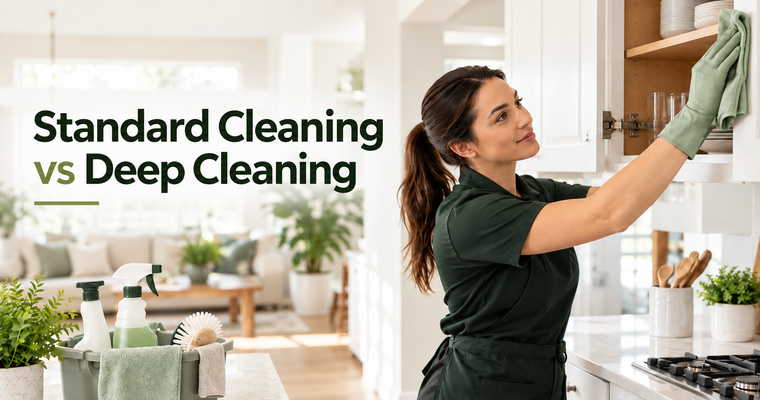
Standard cleaning covers routine upkeep, wiping counters, and vacuuming floors done weekly or monthly. Deep cleaning tackles hidden buildup, appliance interiors, and grout, usually every three to six months. Standard cleaning maintains a home; deep cleaning restores it.
They also give different results. Confusing them can waste time and money. It might also lead to an awkward chat with a cleaner in your kitchen.
Understanding the difference before you book can save time, money, and confusion about what your cleaner will actually do.
What Is Standard Cleaning?
Standard cleaning is routine upkeep. It is the maintenance clean that keeps a home looking tidy and presentable between deeper cleaning sessions.
It focuses mainly on visible and frequently used areas. This usually means wiping counters, vacuuming floors, cleaning bathroom surfaces, and handling general household tidying.
What it normally does not cover is heavy buildup, appliance interiors, detailed grout cleaning, or hard-to-reach areas behind furniture.
Problems usually arise when someone expects a standard clean to deal with months of accumulated dirt. That’s not what the service is for. Knowing the difference between Standard Cleaning vs Deep Cleaning upfront is important.
Standard Cleaning Checklist
- Dust furniture, shelves, and surfaces
- Vacuum carpets and rugs
- Sweep and mop hard floors
- Wipe kitchen counters and stovetops
- Clean sinks, mirrors, and bathroom surfaces
- Empty trash bins
- Making beds and general tidying
- Wiping down high-traffic touchpoints like door handles
If your home looks nice and needs some regular cleaning, go with our standard cleaning service. If you haven’t cleaned anything properly in months, keep reading.
What Is Deep Cleaning?

Deep cleaning targets what standard cleaning skips. It gets into the corners, the buildup, and the grime that gathers over weeks and months.
This is intensive work. A deep clean means scrubbing grout lines. It also involves degreasing the oven. Plus, you move furniture to clean underneath. It removes allergens, bacteria, and dust that regular cleaning simply doesn’t reach.
Deep cleaning takes significantly longer than a standard visit. A standard clean for a two bedroom apartment is usually a quick visit, while a deep clean for the same space takes considerably more time to get through everything properly.
That time difference is the whole point. Depth takes patience.
Deep Cleaning Checklist:
- Scrubbing grout and tile lines in kitchens and bathrooms
- Cleaning inside the oven, fridge, and microwave
- Washing baseboards and skirting boards
- Cleaning behind and under furniture and appliances
- Wiping down cabinet interiors and exteriors
- Detailed dusting of vents, ceiling fans, and light fixtures
- Washing windows, tracks, and sills
- Steam cleaning or spot treating carpets and upholstery
- Sanitizing high-touch surfaces thoroughly, not wiping them
People moving into a new home, recovering from a busy time, or preparing for guests often need this help. Standard cleaning can’t undo months of buildup in one pass; deep cleaning can.
Read more about Room-by-Room Cleaning Routine.
Standard Cleaning vs Deep Cleaning: 7 Key Differences
Here’s a real breakdown of what happens during each service, not marketing talk.
1. Scope: What Each Service Actually Covers
Standard cleaning stays on the surface. It handles visible, high-traffic areas: wiped counters, vacuumed floors, and a tidy bathroom.
Deep cleaning goes further. It finds spots that many people overlook: behind the fridge, inside the oven, and along the grout lines.
2. Purpose: Maintain vs Restore
Standard cleaning maintains a home that’s already in decent shape. It’s upkeep, not repair. Deep cleaning restores a home that’s fallen behind. It resets the space back to a genuinely clean baseline.
3. Frequency: How Often Each One Happens
Standard cleaning happens weekly, fortnightly, or monthly. It has to, since daily life keeps making more mess.
Deep cleaning happens far less often. Most homes need it every three to six months. If you have pets or allergies, aim for every three to four months.
4. Time Required: How Long Each Visit Takes
Standard cleaning fits into a lunch break, usually one to three hours depending on home size. Deep cleaning takes significantly longer. A two-bedroom apartment might take four to eight hours. Larger homes can take an entire day.
5. Areas Covered: Where the Work Happens
Standard cleaning covers kitchen counters, floors, and bathroom surfaces.
Deep cleaning covers grout, vents, appliance interiors, baseboards, and behind furniture and appliances.
6. Equipment and Techniques Used
Standard cleaning relies on basic tools: a vacuum, a mop, and an all-purpose cleaner.
Deep cleaning usually requires special tools. Use steam cleaners for carpets. Use degreasers for kitchens. Use detail brushes for grout lines.
7. Cost: What You’re Actually Paying For
Standard cleaning costs less per visit, given the shorter time and lighter scope.
Deep cleaning costs more per visit. Pricing depends on home size, current condition, and location. A home that hasn’t been deep cleaned in over a year usually costs more since the job takes longer.
Key Differences
This side by side breakdown of Standard Cleaning and Deep Cleaning shows how they differ.
| Factor | Standard Cleaning | Deep Cleaning |
|---|---|---|
| Scope | Visible surfaces, high-traffic areas | Hidden, neglected, hard-to-reach areas |
| Purpose | Maintains a home already in decent shape | Restores a home that’s fallen behind |
| Frequency | Weekly to monthly | Every 3 to 6 months (3 to 4 months for pets/allergies) |
| Time Required | 1 to 3 hours | 4 to 8 hours or more |
| Areas Covered | Kitchen counters, floors, bathrooms | Grout, vents, appliance interiors, behind furniture |
| Equipment | Vacuum, mop, all-purpose cleaner | Steam cleaners, degreasers, detail brushes |
| Cost | Lower per visit | Higher per visit, but far less frequent |
Is there a real difference between regular cleaning and deep cleaning, or between routine cleaning and deep cleaning?
Not quite. Many cleaning companies use words like ‘standard,’ ‘regular,’ ‘routine,’ and ‘general’ to describe similar services. In many cases, general cleaning vs deep cleaning is simply a difference in service level and branding, rather than a completely different type of cleaning.
What often goes unmentioned is that there isn’t a universal standard for these terms. One company’s “standard clean” may include what another calls an “add-on.”
Always ask for the specific checklist before booking, no matter the term used. That one question prevents more disappointment than any amount of label reading.
Can Deep Cleaning Replace Standard Cleaning?

No, and this is a common, costly mistake. Deep cleaning is too infrequent to keep a home consistently tidy. It restores a space once, but daily dust, spills, and clutter return within days.
Think of it like a dentist visit versus brushing your teeth. One deep clean a year doesn’t replace the daily habit. You need both working together, not one substituting for the other.
I’ve seen this mistake play out the same way more times than I can count. Someone books an expensive deep clean and thinks it will last all year. Six weeks later, when the kitchen is messy again, they call it money wasted. The clean didn’t fail. The expectation did.
When Do You Need a Deep Clean?
Certain moments practically demand it.
- Moving in or moving out. New spaces carry old grime, and rental agreements often serve as the basis for bond or lease returns. our move-in and move-out cleaning or end of lease cleaning.
- After a renovation. Construction dust settles into vents and corners regular cleaning won’t clear.
- Before hosting a big event. Guests notice details you’ve stopped seeing.
- After an illness in the household. Deep sanitizing reduces the spread of bacteria and viruses.
- At the start of a new season. Spring and autumn resets clear out months of accumulated dust and allergens.
- After a long absence. Homes left unattended for weeks collect dust faster than people expect.
If more than one of these applies right now, you’re overdue.
What Happens If You Skip Deep Cleaning?
Skipping deep cleaning doesn’t mean a slightly dustier home. Grout stains become permanent the longer they sit. Grease in an unclean oven builds a coating that eventually affects how evenly it cooks.
Carpets hold allergens that regular vacuuming misses. This is important for anyone with asthma or allergies. Plus, there’s a hidden, slower cost. Neglected surfaces wear out faster.
Grime is corrosive over time, on grout, on finishes, on fabric. Skipping deep cleaning isn’t free. It’s a delayed bill that ends up being larger than the cleaning cost itself.Want to know how to keep grime from building up in the first place? Read our tips on preventing common household buildup.
Read more about Benefits Of A Clean and Healthy Home.
Standard and Deep Cleaning Together: Building a Realistic Routine
The households that stay genuinely clean, not just tidy, use both services on a rhythm. A common pattern looks like this: standard cleaning weekly or biweekly, deep cleaning every three to four months.
That combination does two things. Standard cleaning prevents buildup from starting. Deep cleaning removes whatever slips through anyway. Neither one alone covers the full picture.Set up a recurring cleaning plan and never have to think about scheduling again.
Read more about beyond surface level cleaning.
Should You DIY It or Hire a Professional?
You can deep clean your own home, and plenty of people do. It’s not complicated, but it is demanding work. Plan for a full day if you’re cleaning anything bigger than a one-bedroom apartment, and be ready for sore knees from scrubbing grout by hand.
Professional deep cleaning costs more at first, but it saves time. Professionals bring equipment most homes lack, and they often catch spots that a tired DIYer might miss after a few hours.
Neither choice is wrong. It’s a trade-off between time and money, and only you know which one you have less of this month.
Conclusion
Standard Cleaning vs Deep Cleaning depends on your home’s current needs. Standard cleaning keeps a home clean. Deep cleaning turns a neglected home back into a clean one. Confusing the two leads to disappointment on one end and wasted money on the other.
Book based on what your home actually needs right now, not on habit. If months have passed since you scrubbed the grout or degreased the oven, that’s your answer.
If your home already looks decent and needs upkeep, save the deep clean for later.
Not sure which service suits your home? King Cleaners can assess your priorities and recommend a cleaning plan for your property in Albury, Wodonga, or the surrounding Border region. Request a clear quote before booking so you know exactly what’s included.
Frequently Asked Questions
What’s the main difference between standard and deep cleaning?
Standard cleaning maintains a home’s surface level cleanliness. Deep cleaning brings a home back to life. It targets areas that regular cleaning often skips. This includes grout, vents, and appliance interiors.
Is regular cleaning the same as deep cleaning?
No. Regular cleaning and deep cleaning are different service levels. Regular cleaning focuses on routine upkeep, such as floors, counters, and bathroom surfaces. Deep cleaning tackles built-up dirt and areas that routine cleaning usually does not cover.
How often should you deep clean your house?
Every three to six months for most homes. For homes with pets, allergies, or heavy foot traffic, do it every three to four months.
What does a deep cleaning service include that standard cleaning doesn’t?
Grout scrubbing, appliance interiors, baseboards, behind and under furniture, vents, and window tracks. Standard cleaning covers what’s visible; deep cleaning covers what’s hidden.
Is deep cleaning worth the extra cost?
Usually, yes. It costs more each time, but you need it less often. Skipping it can cause bigger, costlier problems later. You might end up with permanent grout stains or appliances that don’t work well.